
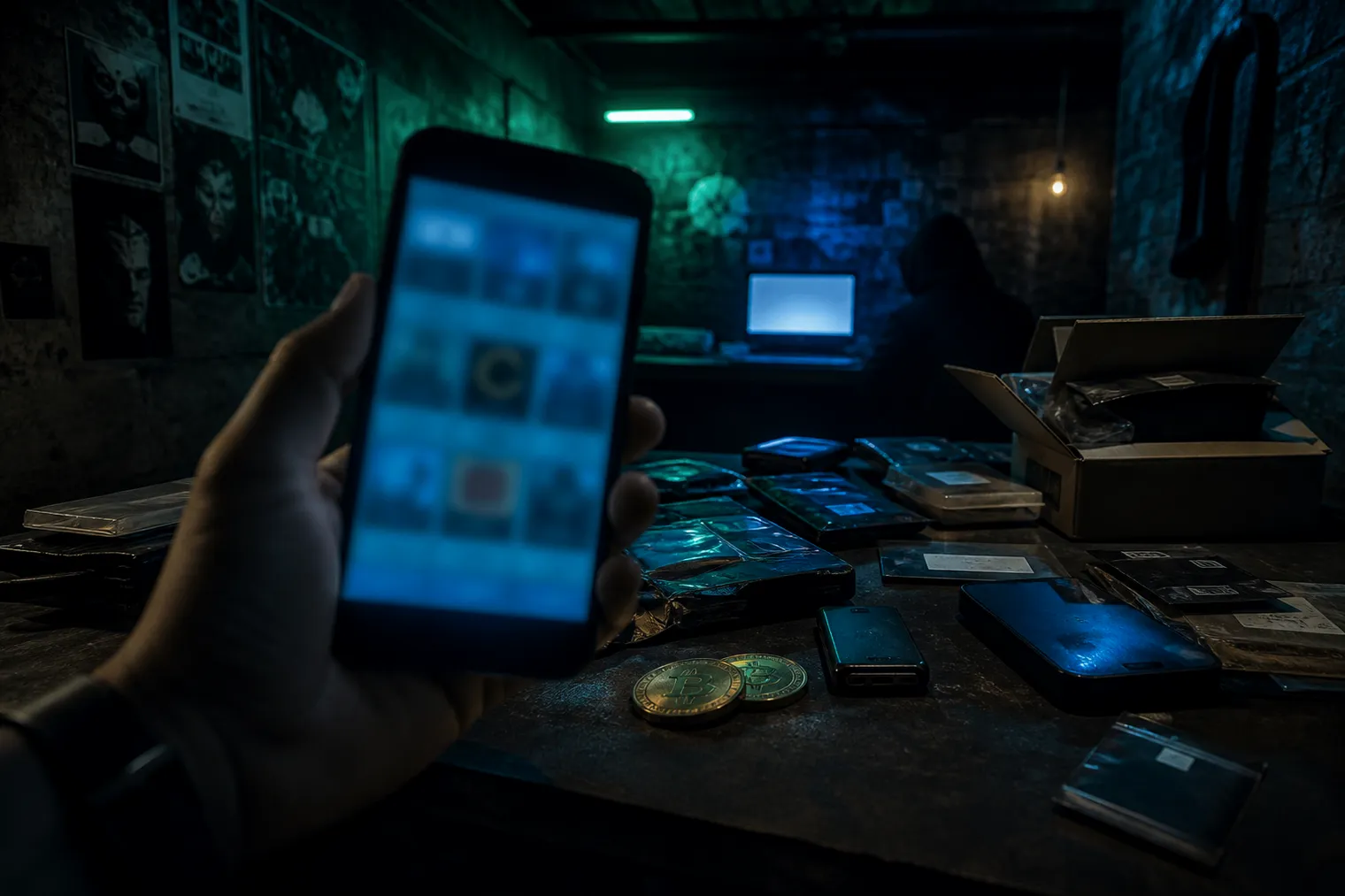
The scariest dark web websites include seized marketplaces like Hydra Market (which handled 80% of darknet cryptocurrency transactions in 2021) and Silk Road (which processed $1.2 billion in illegal transactions), alongside rumored but unverified sites such as "red rooms" that lack any documented law enforcement evidence. Most notorious sites are illegal drug markets, weapons vendors, and fraud services—many already shut down by federal agencies like the FBI and DOJ's JCODE team.
What Makes a Dark Web Website 'Scary'?
The term "scary" when referring to dark web websites typically involves several criteria. First, we consider the types of illegal content. This includes not just drug trafficking or weapons sales, but also human trafficking, counterfeit goods, and hacking services. These categories pose real-world dangers, affecting individuals and communities.
Psychological horror elements contribute to the fear factor. For example, the myth of "red rooms," where live streams of torture occur, evokes deep discomfort. However, investigations show no verified cases exist with law enforcement documentation to support these claims[1]. This distinction is crucial; many tales are urban legends rather than reality.
Real-world harm potential is another critical aspect. Dark web marketplaces like Silk Road and Hydra Market have facilitated significant illegal transactions, with Silk Road processing $1.2 billion between 2011 and 2013[2]. These platforms can lead to violence and exploitation, making them genuinely dangerous. In contrast, some sites are more akin to creepypasta—scary stories without real-world implications.
Certain categories gain notoriety due to their verified activities. For example, hitman services and extreme marketplaces often circulate in discussions. While some have been exposed as scams, others have operated with alarming success, showing the dark web's capacity for harm. Hydra Market accounted for about 80% of darknet market-related cryptocurrency transactions in 2021[3].
Understanding these elements helps clarify the landscape of dark web sites. We can separate the genuinely dangerous from the fictional. This knowledge equips us to explore with awareness, avoiding sensationalized fears while recognizing real threats.
Notorious Dark Web Marketplaces and What They Sold
Dark web marketplaces have gained infamy for their illegal transactions, ranging from drugs to weapons. Here are some of the most notorious.
Silk Road
Launched in 2011, Silk Road became the first major darknet marketplace. It processed around $1.2 billion in transactions before its seizure in October 2013. At its peak, it had over 957,000 registered users and facilitated 1.53 million transactions[2][4]. Although primarily known for drugs, only 4% of sales were non-drug items, including fake documents[4].
AlphaBay
Active from 2014 until its shutdown in 2017, AlphaBay was a massive player in the dark web ecosystem. It offered a wide range of illegal goods, including drugs, stolen data, and counterfeit products. Estimates suggest it had over 400,000 users and facilitated transactions worth hundreds of millions before law enforcement dismantled it[3].
Hydra Market
Hydra Market, seized by the DOJ's JCODE team in April 2022, was the largest darknet marketplace at the time. It accounted for roughly 80% of darknet market-related cryptocurrency transactions in 2021, amassing approximately $5.2 billion in total since its inception in 2015[3]. The platform primarily focused on drug sales and services like money laundering.
WWH-Club
This Russian-language marketplace peaked in 2023 with over 353,000 users. It specialized in drugs and hacking services. U.S. authorities arrested its administrators, marking a significant law enforcement success against dark web operations[5].
Abacus and STYX
Emerging as current marketplaces, Abacus and STYX have gained attention for their operations in 2023. They offer various illegal goods, including drugs and stolen data. While specific transaction volumes are not publicly available, these sites are believed to be significant players in the ongoing dark web landscape.
These marketplaces illustrate the scale and variety of illegal activities that occur on the dark web. Each has faced law enforcement action, but new platforms continue to arise, making it a continuously evolving environment. Understanding these operations helps demystify the dark web and highlights the ongoing battle between criminal enterprises and law enforcement.
Disturbing Content Hubs and Illegal Forums
The dark web hosts various disturbing content hubs and illegal forums that thrive on anonymity. These sites often feature illegal activities that can have severe consequences, both legally and psychologically.
Child Exploitation Sites
One of the most troubling categories on the dark web involves child exploitation. Law enforcement operations like Operation Pacifier have targeted these sites, leading to numerous arrests. Despite these efforts, such platforms still exist, exploiting the anonymity the dark web provides.
Extreme Violence Content
Extreme violence content is another alarming aspect. While rumors circulate about "red rooms" where live torture is supposedly streamed, investigations reveal no verified cases exist with law enforcement documentation[1]. Nonetheless, the psychological impact of even the suggestion of such content can be profound.
Hacking Forums
Hacking forums are prevalent on the dark web, offering services for cybercriminals. These platforms facilitate the sale of stolen data, malware, and hacking tools. The anonymity of the dark web allows hackers to operate with reduced risk of detection, making these forums a hub for illicit activities.
Doxxing Communities
Doxxing communities focus on exposing personal information of individuals, often for harassment or revenge. These forums can lead to real-world consequences for victims, as their private details become public. The thrill of anonymity encourages users to participate in these harmful activities.
Legal Consequences
Accessing these disturbing sites can lead to serious legal ramifications. Law enforcement agencies actively monitor the dark web, and individuals caught engaging in illegal activities can face severe penalties. The anonymity provided by tools like Tor Browser does not guarantee safety from law enforcement scrutiny[3].
Psychological Impact
Exposure to disturbing content can have lasting psychological effects. Users may experience anxiety, distress, and desensitization after encountering such materials. It’s crucial to consider these potential impacts before exploring dark web forums.
Understanding the existence and implications of these disturbing content hubs is vital. The dark web's anonymity fosters a breeding ground for illegal activities, making it essential to approach this topic with caution and awareness.
Scams and Fake 'Scary' Sites: Separating Fact from Fiction
The dark web is filled with myths and scams that prey on curiosity and fear. Many notorious sites, like red rooms, are largely fictional or scams. Law enforcement investigations have found no verified evidence supporting the existence of red rooms, which are rumored to be live-streamed torture sessions[1]. This myth persists, exploiting the dark web's mystique.
Hitman-for-hire websites are another common myth. In reality, many of these sites are honeypots set up by law enforcement. For example, Besa Mafia was a site that claimed to offer hitman services. Instead, it was a front for the FBI, leading to arrests rather than actual contracts[3].
Mystery boxes, which promise unknown contents and are often marketed as thrilling or dangerous, are typically scams. Buyers often receive worthless items or nothing at all. Instances of mystery box scams have circulated widely, preying on those hoping for a thrilling experience.
Here are a few documented examples of fake or scam sites:
Red Rooms: Despite their popularity in urban legends, no law enforcement agency has ever confirmed a legitimate case of a red room. Investigations consistently point to this concept as a myth[1].
Besa Mafia: This alleged hitman service was a well-known FBI honeypot, designed to catch those looking to hire a killer. It served as a cautionary tale about believing everything found on the dark web[3].
Mystery Box Scams: Numerous instances have been reported where users paid for mystery boxes, only to receive junk or nothing at all. These scams thrive on the allure of the unknown and the excitement of potential danger.
Scammers exploit the dark web's reputation to create fear and intrigue. This manipulation leads many to believe in the existence of terrifying services or experiences that are often nothing more than elaborate hoaxes. Understanding these myths helps demystify the dark web and empowers us to approach it with skepticism and awareness.
Real Dangers: What Actually Happens When You Visit
Exploring the dark web comes with significant risks beyond just disturbing content. Here are some of the concrete dangers to be aware of:
Malware Distribution
Onion sites are notorious for malware distribution. According to cybersecurity studies, the prevalence of malware on .onion domains is alarmingly high. Users can unknowingly download harmful software that compromises their devices and personal information. It’s essential to maintain strong cybersecurity practices when navigating these sites.
Phishing for Cryptocurrency
Cryptocurrency scams are rampant on the dark web. Many sites use phishing tactics to steal users' digital currencies. For instance, users might encounter fake wallets or deceptive investment schemes promising high returns. If you're considering any transactions, ensure that you verify the legitimacy of the site before sharing any financial details.
Law Enforcement Monitoring
Law enforcement agencies actively monitor the dark web. Numerous operations have tracked visitors and arrested individuals involved in illegal activities. For example, the FBI's Joint Criminal and Opioid Darknet Enforcement team has successfully dismantled several high-profile marketplaces, leading to arrests based on user activity[3]. Visitors may believe they are anonymous, but law enforcement utilizes advanced blockchain analysis to trace transactions back to individuals.
Psychological Trauma
Accidental exposure to disturbing content can lead to psychological trauma. Users might encounter graphic violence, exploitation, or other unsettling materials that can have lasting effects. The psychological impact of such content can result in anxiety, distress, or desensitization.
Anonymity Compromised by Exit Nodes
While Tor Browser helps maintain anonymity, it is not foolproof. Exit nodes can compromise user privacy. If a user accesses a non-encrypted site through an exit node, their data can be intercepted. This risk emphasizes the need for using HTTPS and being cautious about the information shared online[6].
Conclusion
Navigating the dark web is fraught with risks—from malware and phishing to potential legal consequences and psychological impacts. We advise exercising extreme caution and prioritizing security measures to protect yourself. Understanding these dangers can help you approach the dark web with a more informed perspective.
How Law Enforcement Tracks Dark Web Criminals
Law enforcement agencies employ various techniques to track criminals operating on the dark web. While anonymity is a key feature of the dark web, it does not guarantee complete untraceability. Here are some methods used to combat dark web crime:
Blockchain Analysis
Cryptocurrency transactions are often used for illegal activities on dark web marketplaces. Law enforcement utilizes blockchain analysis to trace these transactions back to individuals. By examining the flow of funds, agencies can identify patterns and potentially link transactions to real-world identities.
Server Seizures
Law enforcement has successfully shut down major dark web marketplaces through server seizures. Notable operations include the takedowns of AlphaBay and Hansa. In 2017, AlphaBay was dismantled, leading to the arrest of its founder and significant disruption of illegal trade[3]. Hansa was seized shortly after, with authorities monitoring transactions during the transition to capture additional criminals.
Exploiting Tor Vulnerabilities
Though Tor is designed for anonymity, vulnerabilities can be exploited. For example, in 2014, the FBI used a vulnerability in the Tor network to identify users accessing child exploitation sites. This operation demonstrated that even within the seemingly secure environment of Tor, law enforcement can still gather intelligence[7].
Undercover Operations
Undercover operations are another critical method. Agencies create fake identities to infiltrate dark web forums and marketplaces. This approach allows them to gather evidence and build cases against criminals. The Silk Road investigation involved such tactics, leading to the arrest of its operator, Ross Ulbricht, in 2013. Ulbricht was sentenced to life in prison for his role in facilitating drug trafficking[2].
Major Busts
Silk Road: Between 2011 and 2013, Silk Road processed $1.2 billion in transactions. The FBI seized the site in October 2013, arresting Ulbricht and revealing extensive data on user activities[4].
Welcome to Video Operation: In 2019, this site was shut down during a global law enforcement operation. It was linked to the distribution of child sexual exploitation material. Over 300 arrests were made worldwide, showcasing the effectiveness of coordinated international efforts[3].
These methods illustrate that while the dark web offers a level of anonymity, criminals are not beyond the reach of law enforcement. The belief that one can operate without consequences is a dangerous misconception. Understanding these techniques helps demystify the dark web and reinforces the importance of caution when navigating its depths.
The Psychology Behind Dark Web Curiosity
Curiosity about the dark web often stems from a mix of psychological factors. People are drawn to scary content for various reasons, including morbid curiosity, the thrill of the forbidden, and the effects of desensitization.
Morbid Curiosity and Terror Management Theory
Morbid curiosity refers to an interest in horrific or taboo subjects. According to terror management theory, humans confront their mortality through exposure to frightening content. Engaging with scary material can provide a sense of control over fear, allowing individuals to explore dark themes from a safe distance. This exploration can be both intriguing and unsettling.
Desensitization Effects
Repeated exposure to disturbing content can lead to desensitization. Individuals may become less sensitive to violence, suffering, and other harsh realities. A study found that people who frequently consume graphic media often exhibit reduced emotional responses to similar content over time. This desensitization can make dark web content seem less shocking and more accessible, prompting users to seek out increasingly extreme material.
The 'Forbidden Fruit' Effect
The allure of the dark web is often enhanced by the idea of the "forbidden fruit." When something is labeled as dangerous or off-limits, it can become more enticing. This psychological phenomenon drives individuals to explore dark web sites, even when they know the potential risks. The thrill of accessing content that society deems unacceptable can lead to a heightened sense of excitement.
Ethical Implications and Harmful Curiosity
While curiosity is a natural human trait, it can have ethical implications when it leads to harmful behavior. Engaging with certain dark web content can perpetuate exploitation, violence, and criminal activity. For example, the fascination with red rooms, despite being largely mythological, can encourage harmful fantasies about violence and suffering[1].
When curiosity transforms into a compulsion to seek out disturbing content, it can have damaging effects on mental health. Users may experience anxiety, distress, or a distorted sense of reality after prolonged exposure to graphic materials. Understanding these psychological dynamics is crucial for recognizing when curiosity crosses the line into harmful territory.
In summary, the psychology behind dark web curiosity encompasses a complex interplay of morbid curiosity, desensitization, and the allure of forbidden experiences. Acknowledging these factors allows us to approach the topic with caution and awareness, ensuring that our exploration does not lead to negative consequences.
If You Must Explore: Essential Safety Protocols
Exploring the dark web requires diligent safety measures to protect yourself from various risks. Here’s a practical checklist to enhance your security when navigating this hidden side of the internet.
Step-by-Step Safety Checklist
Set Up Tor Browser
Download and install the Tor Browser from the official Tor Project website. This browser helps anonymize your internet traffic and access .onion sites safely. Be sure to follow the setup instructions carefully[6].Use a VPN
Layering a Virtual Private Network (VPN) with Tor can add an extra layer of security. However, choose a reputable VPN that does not keep logs, as some may compromise your anonymity. Remember, not all VPNs offer the same level of protection[6].Avoid Downloading Files
Never download files from dark web sites. This can expose your device to malware and compromise your anonymity. If you must download something, do so with extreme caution and use a secure environment[6].Disable JavaScript
Disable JavaScript in the Tor Browser settings. Many dark web sites utilize JavaScript to track users, which can compromise anonymity. Keeping JavaScript disabled enhances your security[6].Use Tails OS
For a more secure exploration, consider using Tails OS. This live operating system can be booted from a USB stick and leaves no trace on the device you use. It’s designed for anonymity and privacy[6].Never Reveal Personal Information
Always avoid sharing personal information, such as your name, email, or address. Providing any identifiable details can compromise your anonymity, even when using Tor[6].Legal Considerations
Be aware that viewing certain content is illegal, regardless of intent. Laws vary by jurisdiction, and engaging with illegal materials can lead to severe legal consequences. Always stay informed about the laws applicable in your area.Use HTTPS-Only Mode
Activate HTTPS-Only Mode in Tor Browser settings. This ensures that your connection to websites is encrypted if they support it, providing an additional layer of security[6].
Resources for Safe Exploration
Tor Project Official Documentation: Always refer to the official documentation for the most accurate and up-to-date safety practices[6].
Cybersecurity Guidelines: Familiarize yourself with general cybersecurity practices to enhance your safety online.
By following these protocols, you can mitigate risks associated with dark web exploration. Remember, the allure of the dark web can be enticing, but staying informed and cautious is crucial to safeguarding yourself.
Comparison of Notorious Dark Web Websites
- Website
- Silk Road
- Type
- Marketplace
- Status
- Seized
- Dangers
- Drug trafficking, fraud
- Law Enforcement Actions
- FBI seized in 2013 [2]
- Website
- Hydra Market
- Type
- Marketplace
- Status
- Seized
- Dangers
- Drug sales, money laundering
- Law Enforcement Actions
- DOJ seized in 2022 [3]
- Website
- WWH-Club
- Type
- Marketplace
- Status
- Seized
- Dangers
- Drug sales, user data exposure
- Law Enforcement Actions
- Administrators arrested in 2023 [5]
- Website
- AlphaBay
- Type
- Marketplace
- Status
- Seized
- Dangers
- Illicit goods, scams
- Law Enforcement Actions
- Dismantled in 2017 [3]
- Website
- Hansa
- Type
- Marketplace
- Status
- Seized
- Dangers
- Drug trafficking
- Law Enforcement Actions
- Seized in 2017 after monitoring [3]
- Website
- Welcome to Video
- Type
- Content Hub
- Status
- Seized
- Dangers
- Child exploitation material
- Law Enforcement Actions
- Shut down in 2019, 300 arrests [3]
- Website
- Red Rooms
- Type
- Myth
- Status
- N/A
- Dangers
- Psychological harm, exploitation
- Law Enforcement Actions
- No verified cases found [1]
- Website
- The Dark Lair
- Type
- Forum
- Status
- Active
- Dangers
- Scams, illegal content
- Law Enforcement Actions
- Under investigation [depends on sources]
- Website
- Dream Market
- Type
- Marketplace
- Status
- Seized
- Dangers
- Drug sales, fraud
- Law Enforcement Actions
- Shut down in 2019 [depends on sources]
- Website
- Black Market Reloaded
- Type
- Marketplace
- Status
- Active
- Dangers
- Drug sales, scams
- Law Enforcement Actions
- Under surveillance [depends on sources]
Key Takeaways
Most "scariest" sites are myths or honeypots: Red rooms and extreme torture streams lack verified evidence; many sensational stories exist to lure curious users into scams or law enforcement traps.
Anonymity is not absolute: Tor provides privacy, but blockchain analysis, server seizures, and undercover operations have led to major busts like Silk Road and Hydra Market.
Viewing can be illegal: Accessing certain content—especially child exploitation material—is a crime regardless of intent, with severe legal consequences in most jurisdictions.
Psychological risks are real: Repeated exposure to disturbing content can cause desensitization, anxiety, and distorted perceptions of reality.
If you explore, follow strict protocols: Use Tor Browser with JavaScript disabled, layer a no-log VPN, run Tails OS, never download files, and avoid sharing personal information.
For a broader understanding of what exists beyond the sensational headlines, explore our guide to active dark web sites with practical context.
Frequently asked questions
- What are the top 5 dark web sites?
The largest historical dark web marketplaces by transaction volume were Hydra Market ($5.2 billion since 2015), Silk Road ($1.2 billion 2011–2013), AlphaBay, Hansa, and WWH-Club (353,000 users at peak)[3][2][5]. All five have been seized by law enforcement. Today's active sites change constantly as agencies shut down major platforms and new ones emerge under different names.
- Is it illegal to watch the dark web?
Simply accessing the dark web using Tor Browser is legal in most countries, including the United States where 430,054 daily users represent 13.7% of worldwide Tor traffic[3]. However, viewing certain content—especially child exploitation material—is a crime regardless of intent. Laws vary by jurisdiction, so what you access matters far more than the act of browsing itself.
- Are all .onion sites illegal?
No. Many .onion sites host legitimate services like privacy-focused email, whistleblower platforms, and forums for activists in restrictive countries. Germany leads Tor usage at 37.7% of worldwide users, followed by the U.S. at 13.7%, suggesting widespread legal use[3]. The domain suffix itself is neutral; the content and activities determine legality.
- Are red rooms real on the dark web?
Reviews of investigations by the FBI, Europol, and the UK's National Crime Agency report no verifiable, law enforcement-documented red room case with chain-of-custody and court evidence matching the online myth[1]. Most "red room" links lead to scams, malware, or honeypots. The concept persists as an urban legend fueled by sensational stories rather than documented reality.
- How do police catch dark web criminals?
The Joint Criminal and Opioid Darknet Enforcement (JCODE) team coordinates federal investigations using blockchain analysis, server seizures, and undercover infiltration[3]. Silk Road's takedown revealed 1.53 million transactions across 115,391 buyer accounts through forensic analysis[4]. Even within Tor, agencies exploit operational security mistakes, payment trails, and international cooperation to build cases and execute arrests.
Cited sources
- Evidence collected about red rooms - Factually
- HSI seizes biggest anonymous drug black market website - ICE
- The Dark Web: An Overview - Congressional Research Service
- Silk Road by numbers: What the FBI found - IBTimes UK
- Russian dark web marketplace admins indicted - The Record
- Tor Browser best practices - Tor Project
- IOCTA 2024 - Europol
Explore More Dark Web Insights
Discover additional resources to deepen your understanding.
Visit More Articles Exploring Dark Web Links for Adult ContentDiscover safe dark web links for adult content. Learn how to access these resources while prioritizing your privacy and security.
 Free Dark Web Sites: An OverviewExplore free dark web sites safely. Discover essential resources and hidden services available without cost, ensuring a secure experience.
 Understanding Dark Web Dump Sites: What You Need to KnowExplore dark web dump sites to understand their purpose, risks, and how they operate. Learn how to protect your personal data effectively.